
Deadline November 6, 2026
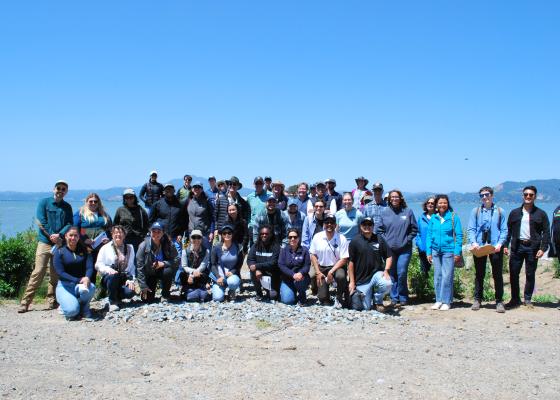
In 2016, voters of the nine-county San Francisco Bay Area passed Measure AA, the San Francisco Bay Clean Water, Pollution Prevention and Habitat Restoration Measure. This measure is a parcel tax of $12 per year which raises approximately $25 million annually to fund shoreline projects that will protect and restore the Bay. The Governing Board of the Restoration Authority has awarded over $159 million in grants funded by Measure AA over the past five years, benefiting habitats and communities across the Bay Area. We are seeking community representatives and other experts to help advise on our work and which projects to fund next.
Measure AA is generating $500 million over 20 years. Funding from this measure is enabling the restoration of thousands of acres of natural habitat for wildlife, supporting our local economy, improving access to public lands, addressing flooding issues, and creating thousands of new jobs.
The Authority’s Governing Board seeks representatives and leaders of community-based organizations, Tribes, agencies and other experts to serve on the San Francisco Bay Restoration Authority’s Advisory Committee (AC). Members serve four-year terms and meetings are held four times per year. The time commitment is 10-20 hours per year, depending on level of involvement in subcommittees and/or the grant application review process. The Authority provides stipends of $200 per AC meeting attended, and additional stipends for work completed, to eligible Committee members.
The Authority is placing priority on adding leaders of community-based organizations located in economically disadvantaged communities to the Advisory Committee, as well as maintaining representation of agencies and types of organizations named in the Authority’s enabling legislation (see list below under “Background”). To date, about 60% of our projects have benefitted economically disadvantaged communities.
Community-based candidates with expertise in addressing environmental justice issues and/or candidates with experience working with Tribes are strongly encouraged to apply. Environmental justice expertise may include experience working with economically disadvantaged communities that are historically underrepresented in environmental policymaking and/or projects, bear a disproportionate environmental and health burden, or are most vulnerable to climate change impacts due to lack of resources required for community resilience. Experience working with representatives of Tribes may include experience facilitating a Tribal council or advisory committee, co-managing a project with Tribes, or being a representative of a Tribe or intertribal council, regardless of federal or state recognition.
Serving on the AC will not prevent that AC member’s organization from applying for grants. Conflicts of interest will be avoided through specific policies that restrict members from influencing project selection in grant rounds in which they are competing for funds. Those AC members who are not applying for funds or explicitly supporting specific projects in a given round may volunteer to serve as grant application reviewers.
To Apply
If interested, apply online by November 6, 2026.
Role of the Advisory Committee
The AC’s role is to provide diverse perspectives, generate new ideas, and seek consensus on recommendations to Governing Board of the Restoration Authority.
Past work of the AC has included:
-
Commenting on grant program documents and procedures;
-
Developing a proposed definition of economically disadvantaged communities for the grant program guidelines that was adopted by the Governing Board;
-
Developing recommendations on performance measures for the grant program;
-
Advising the staff of the Restoration Authority in developing a communications strategy;
-
Reviewing and commenting on the Authority’s Annual Report; and
-
Providing recommendations on improvements to outreach and technical assistance to partners in economically disadvantaged communities and other measures to address equity in the Authority’s grant program.
Future work of the AC is expected to include:
-
Expanding the Authority’s collaboration with local Tribes and Tribal organizations;
-
Guiding the implementation of equity goals;
-
Aligning the Authority’s performance measures with other regional bay restoration efforts;
-
Reviewing and commenting on the Authority’s Annual Report; and
-
Other efforts to be determined by the AC with input from staff or the Governing Board.
As mentioned above, those AC members who are not applying for funds or explicitly supporting specific projects in a given round may volunteer to serve as grant application reviewers.
AC Size, Diversity, and Areas of Expertise
11 of the 33 current AC members’ terms will expire in February of 2027. Prior to expiration of these members’ terms, the Governing Board will appoint new members. Past AC members and current AC members whose terms will expire in February 2027 are allowed to reapply. Staff will recommend appointing 8-12 members in order to stay within the maximum size of 34 members.
The Board seeks Advisory Committee members from all nine Bay Area counties with racial, ethnic, income, and gender diversity and expertise in the following areas:
-
Habitat restoration
-
Environmental justice
-
Water quality
-
Flood protection
-
Public access and recreation
-
Pollution reduction
-
Economic
-
Public and private financing
-
Community engagement
-
Regulatory policies
-
Regional and local governance in the San Francisco Bay Area
-
Operation and maintenance of public lands
-
Monitoring and evaluation of restoration
-
Public and private partnerships
-
Public health
-
Climate change
Background
The San Francisco Bay Restoration Authority was formed by the California Legislature in 2008. The Authority’s mission is to raise and allocate resources for the restoration, enhancement, protection, and enjoyment of wetlands and wildlife habitat in the San Francisco Bay and along its shoreline, as well as related public recreation and flood protection projects.
The Authority is led by a Governing Board of seven members from local governments. An Advisory Committee comprised of private citizens, local stakeholders and experts on Bay issues supports the work of the Authority. The Advisory Committee represents both the interests of the community, as well as the interests of agencies within the Restoration Authority’s jurisdiction, pertaining to the restoration of wetland areas in the San Francisco Bay and along its shoreline.
The enabling legislation provides that membership of the Advisory Committee may include, but is not limited to, representatives from the below:
-
The California Department of Fish and Wildlife
-
The State Coastal Conservancy
-
The San Francisco Bay National Wildlife Refuge Complex operated by the United States Fish and Wildlife Service
-
Open space park districts that own or operate shoreline parcels in the San Francisco Bay Area
-
The San Francisco Bay Regional Water Quality Control Board
-
The San Francisco Bay Conservation and Development Commission
-
The San Francisco Bay Joint Venture Management Board
-
The San Francisco Bay Trail Project
-
The San Francisco Estuary Partnership
-
Nongovernmental organizations working to restore, protect, and enhance San Francisco Bay wetlands and wildlife habitat
-
Members of the public from bayside cities and counties in the San Francisco Bay Area
More Information
For more information on the San Francisco Bay Restoration Authority, please visit our website. Information about the AC can be found here.
Apply online by November 6, 2026
Questions? Email info@sfbayrestore.org.